For people with pets, what furniture materials actually hold up over time?
Pet-friendly furniture materials that survive real homes: solid wood, sealed finishes, washable textiles, tight weaves, and replaceable parts.
Most furniture does not fail because a pet destroyed it.
It fails because the material was chosen for a showroom, not for a home where claws, fur, moisture, jumping, cleaning, and daily friction are part of the brief.
That is the honest test of pet-friendly furniture materials. Not whether the piece looks perfect on day one, but whether it still looks intentional after three years of claws, hair, cleaning, weight, friction, and small daily accidents.
So, for people with pets, what furniture materials actually hold up over time?
The short answer: solid wood, high-quality plywood, tightly woven performance fabrics, washable textiles, replaceable pads, and sealed low-VOC finishes usually age best. Soft pine, loose-weave upholstery, untreated rattan, thin veneer, glossy lacquer, and cheap particleboard usually age worst.
The better answer is more specific, because a material that survives a quiet senior cat may not survive a young dog, and a fabric that works on a decorative cushion may fail completely on a daily-use pet bed.
Pet-Friendly Furniture Materials Start With the Damage Your Pet Actually Creates
Material advice becomes useless when it treats all pets as the same.
A cat does not damage furniture like a large dog. A senior dog does not behave like a young climbing cat. A home with one calm pet does not need the same material strategy as a home with three animals competing for the same sunny corner.
Before you choose wood, fabric, or finish, ask what kind of stress the furniture will face most often:
- Scratching from claws
- Jumping and landing pressure
- Moisture from accidents, drool, or water bowls
- Fur buildup in seams and textured surfaces
- Chewing on corners or trim
- Repeated washing of cushions and bedding
- Sun exposure near windows
- Daily cleaning with pet-safe products
The best pet-friendly furniture materials are not simply “strong.” They are strong in the right way.
Solid Wood Holds Up Better Than Most Pet Owners Expect
Solid wood is still one of the most reliable materials for pet furniture, especially when the structure is meant to carry weight or stay stable over time. It can be sanded, refinished, repaired, and resealed. That gives it a longer life than many synthetic-looking pieces that cannot be restored once the surface fails.
In our own product work, this is the difference we keep seeing: customers forgive a small mark in real wood because it becomes part of the piece. They do not forgive peeling laminate, swollen corners, or a wobbling panel that makes the whole bed feel temporary.
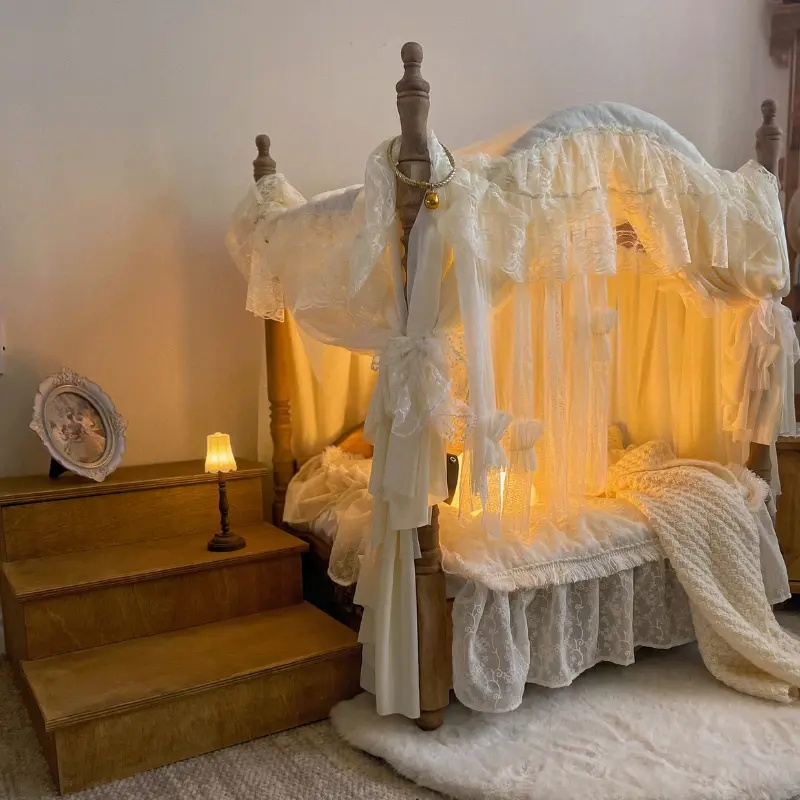
For example, the Canopy Princess Vintage Pet Bed uses a solid wood structure because a decorative pet bed still has to behave like real furniture. The carved frame, raised form, and canopy details would not age well if they were only thin decorative panels pretending to be wood.
Solid wood is especially good for:
- Bed frames
- Steps and ramps
- Cat shelves and perches
- Pet wardrobes and display furniture
- Furniture that may need refinishing later
The mistake is assuming all wood performs the same. Very soft woods can dent quickly. Overly glossy finishes show scratches. Unsealed wood can absorb moisture and odors. A good pet furniture piece should combine solid construction with a practical surface finish.
High-Quality Plywood Can Be Better Than Cheap Solid Wood
Many buyers hear “plywood” and think “cheap.” That is not always fair.
High-quality plywood can be extremely stable because its layers resist warping. For pet furniture, that matters. A shelf, stair, or platform that bends over time becomes less comfortable and less trustworthy for the animal using it.
Cheap particleboard is a different story. It can swell when exposed to moisture, crumble around fasteners, and lose strength at the edges. If a cat tree or pet cabinet feels heavy but hollow, check what is actually inside.
Use this simple rule: engineered wood is only good when it is engineered honestly. Thick, well-bonded plywood with sealed edges can be excellent. Thin particleboard wrapped in fake grain paper is usually a short-term product.
Performance Fabric Beats Loose-Weave Upholstery
Fabric is where many pet owners make the most expensive mistake.
Loose-weave fabrics catch claws. Boucle looks beautiful until it becomes a playground for scratching. Velvet can work in some homes, but it depends heavily on pile direction, cleaning habits, and the animal. Linen wrinkles and absorbs more than most pet owners want to admit.
The most durable pet-friendly upholstery usually has three qualities:
- Tight weave
- Stain resistance
- Easy cleaning
Microfiber, performance polyester blends, outdoor-grade fabrics, and tightly woven canvas tend to hold up better than delicate natural weaves. For pet bedding, removable and washable covers matter more than romantic product copy.
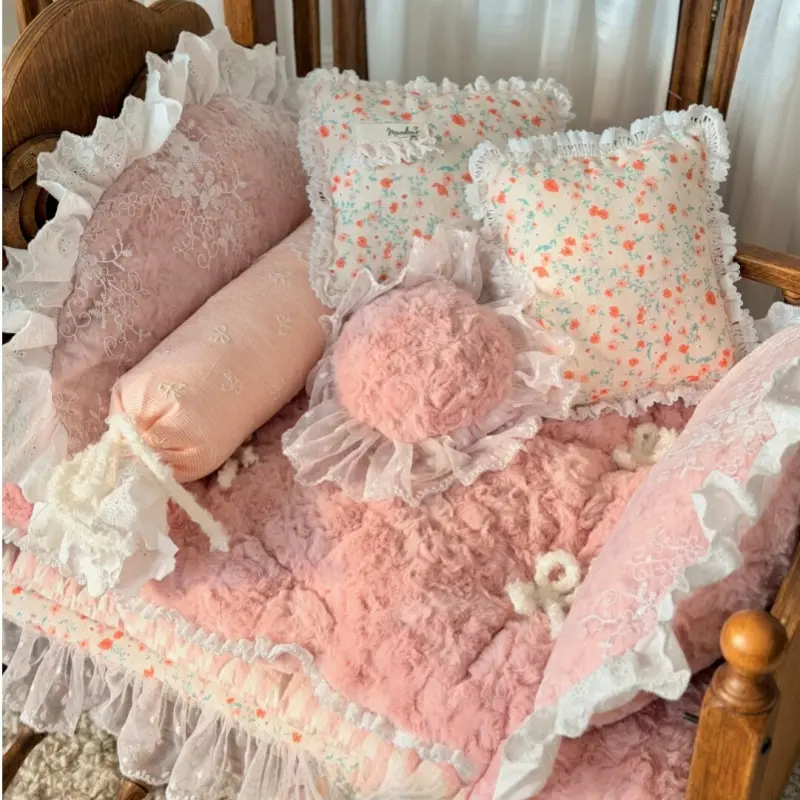
If you are choosing soft goods rather than hard furniture, start with the Beddings & Cloth collection. The useful question is not “Is it soft?” The useful question is “Can I clean it repeatedly without ruining the texture?”
Washable Textiles Are More Important Than Premium Textiles
In pet homes, washable beats precious.
The most beautiful cushion in the world becomes a problem if it cannot handle hair, odor, moisture, and regular cleaning. This is why modular bedding and replaceable pads often age better than fixed upholstery. When the soft part can be removed, washed, replaced, or rotated, the furniture lasts longer.
Look for:
- Zippered covers
- Removable cushions
- Washable mattress pads
- Replaceable scratch surfaces
- Avoidance of deep tufting where fur collects
Deep seams, buttons, tassels, and fluffy trim can be charming, but they also collect hair and debris. They are best used where they can be cleaned easily or replaced without replacing the whole piece.
Sealed Finishes Matter as Much as the Base Material
A good material can fail under a bad finish.
Pet furniture should use finishes that resist moisture and are safe for indoor use. The goal is not to wrap the furniture in plastic. The goal is to create a surface that can handle normal cleaning without becoming sticky, cloudy, or damaged.
For wood furniture, look for:
- Smooth sealed surfaces
- Low-VOC or pet-safe finishes
- Rounded edges that do not chip easily
- Matte or satin finishes that hide small scratches better than gloss
- Surfaces that can be wiped without absorbing liquid
Glossy lacquer can look luxurious in a photo, but it often shows claw marks and dust quickly. A softer satin finish is usually more forgiving in a real pet home.
Rattan, Cane, and Wicker Need Caution
Natural woven materials can be beautiful, but they are not always durable around pets.
Cats may treat rattan as a scratcher. Dogs may chew edges. Cane panels can break when leaned on or pawed repeatedly. Dust and fur can settle into the weave. That does not mean these materials are forbidden. It means they should be used where they are decorative, replaceable, or protected.
If you love the look, use woven materials in accents rather than load-bearing or high-contact zones. For daily pet use, solid wood and washable textiles are usually safer.
Metal Is Durable, But Not Always Comfortable
Metal frames, brackets, and hardware can be excellent when used structurally. They add strength, reduce wobble, and allow cleaner installation. But metal is rarely the best direct resting surface for pets.
Cats and dogs usually prefer warmth, grip, and texture. A metal bracket is useful. A metal sleeping platform is not.
In good pet furniture, metal should do the engineering work while wood, fabric, or padded surfaces handle the animal contact.
The Best Pet Furniture Is Repairable
Durability is not only about resisting damage. It is also about what happens after damage occurs.
Can the cushion be replaced? Can the scratch pad be renewed? Can the wood be touched up? Can the hardware be tightened? Can one part be changed without throwing away the whole structure?
This is where furniture-grade pet pieces separate themselves from disposable pet products.
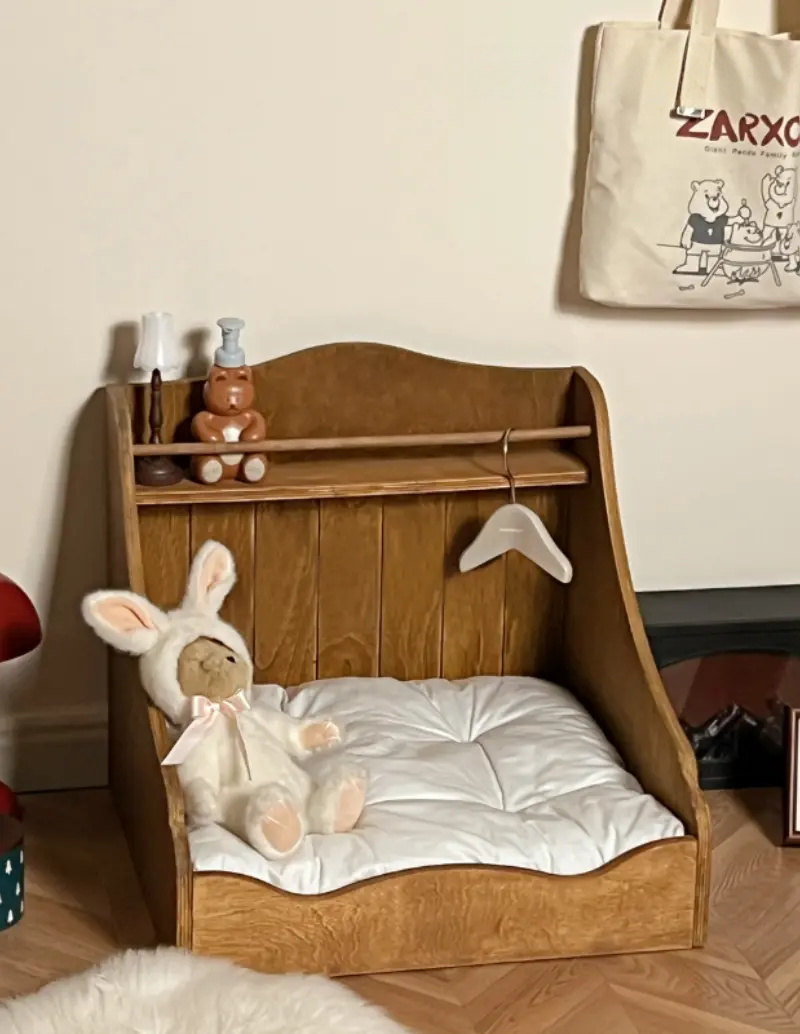
The Nordic Vintage Solid Wood Pet Bed is a good example of why repairability matters. A solid frame can keep its place in the room while bedding and accessories change with use, washing, and seasonal preference.
Material Choices by Pet Behavior
Here is the practical version.
| Pet behavior | Better material choice | Avoid |
|---|---|---|
| Cats who scratch furniture | Solid wood frame plus replaceable scratch surfaces | Loose weave fabric, soft exposed trim |
| Dogs who drool or track moisture | Sealed wood, washable covers, performance fabric | Raw wood, untreated fabric, particleboard |
| Senior pets | Stable wood structure, low steps, soft washable bedding | Slippery gloss surfaces, high jumps |
| Multi-pet homes | Strong frames, removable cushions, easy-clean surfaces | Delicate upholstery, deep seams |
| Pets who shed heavily | Smooth wood, tight-weave fabric, removable covers | Boucle, heavy texture, deep tufting |
What We Use Most Often in Pet-Friendly Furniture
For long-term pet furniture, our material preference is simple:
- Solid wood or stable plywood for the structure.
- Sealed surfaces for cleaning and moisture resistance.
- Washable textiles where the animal rests.
- Replaceable soft parts where wear is expected.
- Minimal deep seams where fur can collect.
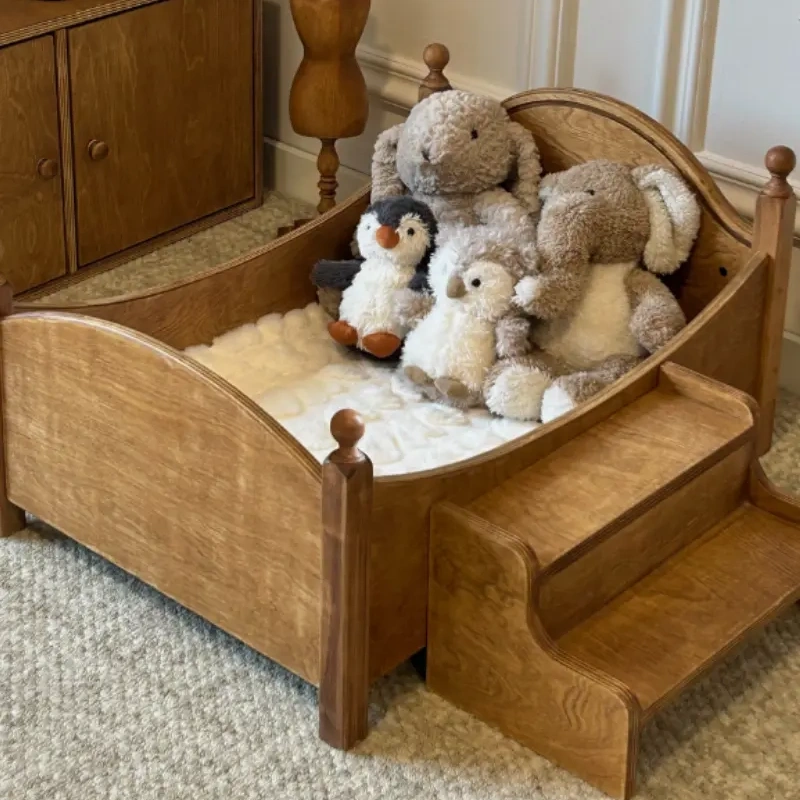
The Original Retro Wooden Pet Bed with Stairs adds one more useful lesson: material durability and pet accessibility belong together. A strong bed is not enough if an older cat or small dog has to strain to enter it. Good furniture lasts physically, but it also remains usable as the pet ages.
The Materials That Usually Disappoint
Some materials are not automatically bad, but they often disappoint pet owners over time:
- Thin veneer over particleboard: Looks good at first, then chips, swells, or peels.
- Loose-weave upholstery: Catches claws and collects hair.
- Untreated natural fibers: Absorb stains and odors.
- High-gloss finishes: Show scratches quickly.
- Cheap foam: Compresses and loses comfort.
- Decorative trim in high-contact zones: Becomes a chew, scratch, or cleaning problem.
If a piece is meant to be used every day by pets, avoid materials that only photograph well.
So, What Actually Holds Up?
The furniture materials that hold up best for people with pets are not mysterious. They are practical:
- Solid wood for structure
- Quality plywood when stability matters
- Sealed low-VOC finishes
- Tight-weave performance fabrics
- Washable bedding
- Replaceable cushions and scratch surfaces
- Hardware that can be tightened or serviced
The real secret is not choosing one miracle material. It is designing the whole piece around wear.
Pets do not ruin good furniture. They reveal whether it was honest furniture in the first place.
If you are choosing one place to start, start with the Beds collection. It shows the material logic clearly: stable wooden structures, soft washable parts, and furniture that is meant to stay in the room rather than hide from it.