Choosing a Wood Species for Pet Furniture
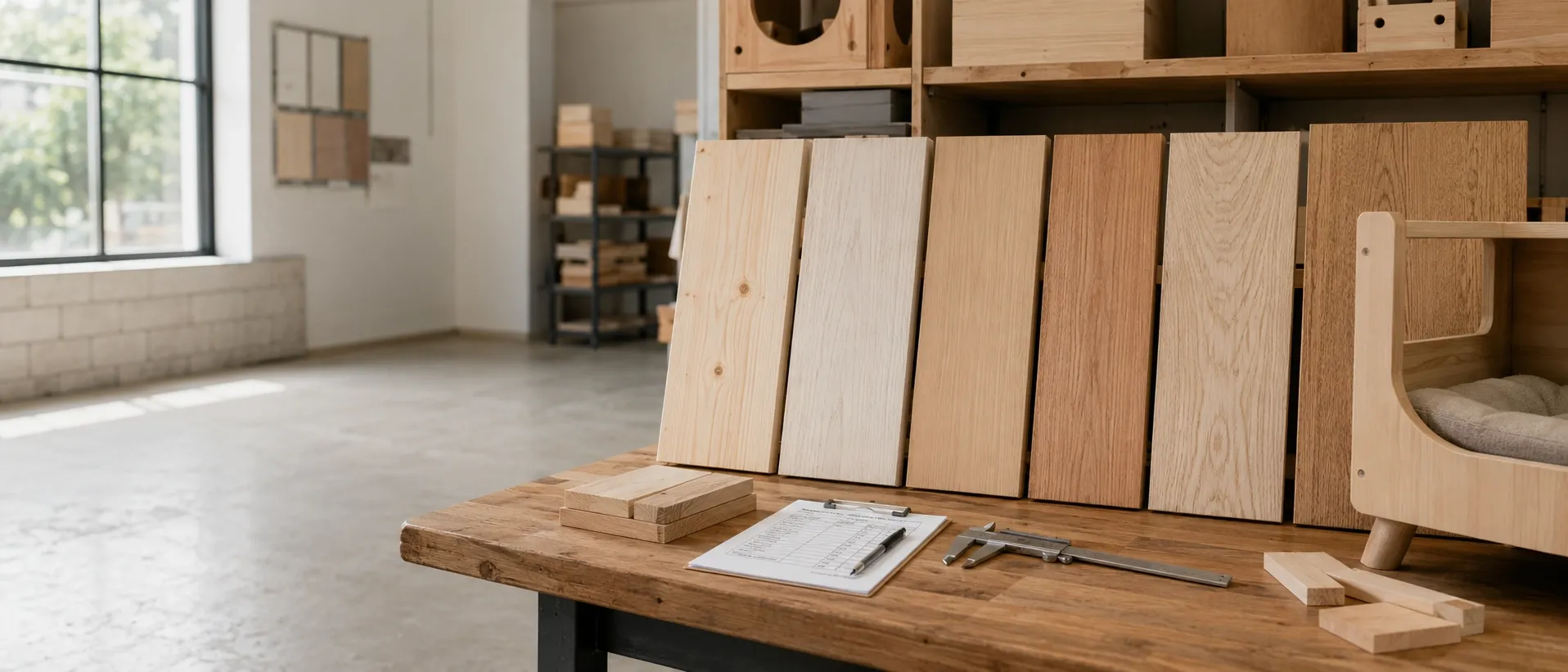
Pine is the correct default for painted designs: stable, cheap, finishes evenly. Use rubberwood or beech wherever a part carries load or is carved, ash or oak where the grain is meant to be seen, and paulownia only where shipping weight is the binding constraint — it is the lightest by a wide margin and the worst at holding a screw.
Most well-designed pet furniture mixes two species in one product. Cost swing across the whole range is about 35%, which is less than the quantity discount available on the same order.
Species compared
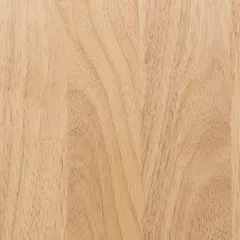
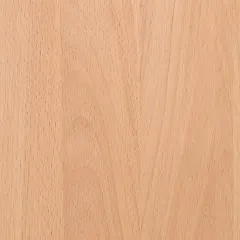
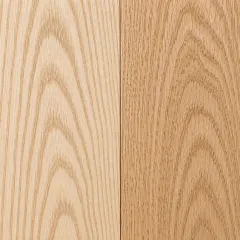
| Species | Density | Relative cost | Screw retention | Finish behaviour | Best for |
|---|---|---|---|---|---|
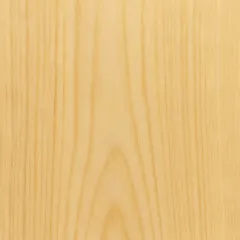
| New Zealand pine | 400-500 kg/m3 | Baseline | Good | Takes paint evenly; closed enough grain for a flat colour | Painted frames, panels, the default for most designs |
| Paulownia | 260-330 kg/m3 | Baseline to +5% | Poor — needs inserts or a wider section | Absorbent; needs an extra primer pass | Large lightweight panels, air-freighted items, portable products |
| Rubberwood | 560-640 kg/m3 | +10-15% | Very good | Even, slightly open grain; good under paint and stain | Legs, stair treads, anything load-bearing |
| Beech | 680-750 kg/m3 | +20-30% | Excellent | Fine, tight grain; the best surface for carved detail | Turned columns, carved details, premium frames |
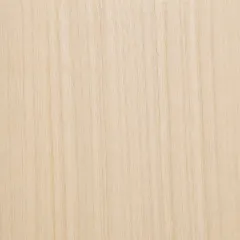
| Ash | 650-750 kg/m3 | +25-35% | Excellent | Open grain, strong figure — made for oil and clear finishes | Visible-grain Scandinavian designs, oiled finishes |
| Oak | 680-760 kg/m3 | +25-35% | Excellent | Open grain, high perceived value | Premium retail positioning, oiled and natural finishes |
What to watch on each
| Species | The thing that catches people out |
|---|---|
| New Zealand pine | Soft — dents from a dropped bowl show. Not ideal for a bare oiled finish. |
| Paulownia | The lightest option by far. Cuts freight cost, but do not use it for a load-bearing leg without redesigning the joint. |
| Rubberwood | Finger-jointed stock is normal and structurally fine, but the joints show through a light stain. |
| Beech | Hard on tooling, which is part of the cost. Moves more than pine with humidity swings. |
| Ash | Pantone matching is approximate: the grain shows through the coat. |
| Oak | Tannins can react with water-based coatings and cause staining if the primer is wrong. Same colour-matching caveat as ash. |
Moisture content matters more than species
Timber is kiln-dried and held at 8-12% moisture content before machining. Above 14% the joints move in dry heated interiors and the finish cracks within one winter.
This is the failure that final inspection cannot catch. A joint that is tight in a humid Foshan workshop opens up in a dry heated apartment in Berlin or Chicago three months later, and the finish cracks along the glue line. It is decided at the timber yard, not on the assembly line, which is why moisture is the first thing checked at incoming inspection rather than something verified at the end.
If you are comparing quotations from several factories, ask each what moisture content they hold and how they measure it. The ones that cannot answer are the ones whose price looks best.
Where panels are the right answer
Solid wood is not automatically better. A wide flat panel in solid wood will cup; plywood will not. Use panels for backs, shelves, drawer bottoms and any large flat area, and solid wood for frames, legs and anything visible on an edge.
| Material | Emission grade | Thickness |
|---|---|---|
| Plywood | E0 / E1 | 9 / 12 / 15 / 18 mm |
| MDF | E1 | 9 / 12 / 15 / 18 mm |
| Particle board | E1 | 15 / 18 mm |
Formaldehyde grade is a compliance question as much as a quality one — E1 as standard; E0 on request at a small material premium. See compliance and testing for what each market requires.
How species interacts with finish
- Closed-grain species under paint — pine, rubberwood and beech take a flat opaque colour cleanly. This is the cheapest good-looking combination.
- Open-grain species under oil — ash and oak are chosen precisely so the grain reads. Do not paint them opaque; you are paying 30% more to hide the reason you bought them.
- Open-grain species under paint — possible, but the grain telegraphs through and the Pantone match becomes approximate. If a buyer insists, sign the drawdown on the actual species.
- Oak with water-based coatings — tannins can react and stain if the primer is wrong. A tannin-blocking primer is specified as standard on oak here, which is why oak carries an extra finishing pass.
- Paulownia under any finish — absorbent, needs an extra primer pass, which partly offsets the material saving.
The standard build is 4 coats - 2 primer plus 2 topcoat, sanded to 240 grit between primer coats, cured 48-72 hours before packing, so the finish does not block or off-gas inside the carton.
Wood species questions
What is the best wood for pet furniture?
There is no single best. Pine is the right default for painted designs because it is stable, cheap and finishes evenly. Use rubberwood where a part carries load, beech where it is carved, ash or oak where the grain is meant to be seen, and paulownia where shipping weight is the constraint. Most of our designs mix two species in one product for exactly this reason.
Which wood is cheapest?
Pine and paulownia sit at the baseline. Rubberwood adds 10-15%, beech 20-30%, ash and oak 25-35%. But species is rarely the biggest lever on total landed cost — quantity and shipping volume usually move the number further.
Is MDF or plywood acceptable for pet furniture?
They are used, and appropriately so, for flat panels — backs, shelves, drawer bottoms — where solid wood would warp or cost more without any benefit. We supply Plywood (E0 / E1, 9 / 12 / 15 / 18 mm); MDF (E1, 9 / 12 / 15 / 18 mm); Particle board (E1, 15 / 18 mm). The place they are not appropriate is anywhere a screw has to hold under repeated load, or anywhere the edge will be chewed.
Why does moisture content matter more than species?
Timber is kiln-dried and held at 8-12% moisture content before machining. Above 14% the joints move in dry heated interiors and the finish cracks within one winter.
Which wood holds a screw best?
Rubberwood, beech, ash and oak are all excellent. Pine is adequate with a correctly sized pilot hole. Paulownia is genuinely poor — it needs threaded inserts or a substantially wider section, and this is the most common failure when someone specifies paulownia purely to save freight.
Can I mix species in one product?
Yes, and it is usually the right answer: pine or paulownia for panels, rubberwood or beech for legs and load points. It costs less than building the whole piece in the harder species and performs better than building it all in the softer one. We will propose this at the DFM review if your drawing does not already do it.
Does the wood species affect the finish colour?
Yes, on open-grain species. Pantone (TPG / TCX) or a supplied physical chip. A colour drawdown is sent for signature before mass production. On oak and ash the grain shows through the coating, so a Pantone match is approximate and the drawdown must be signed against the actual species you are ordering — not against a pine sample.
Can you supply FSC-certified timber?
Yes, on request. It adds roughly 8-12% to material cost and about 7 days to lead time. If you sell into the EU, the due-diligence requirements around timber origin make it worth pricing rather than dismissing.
Where to go next
CatFurnitureHome production team — Tira Chan, Export Sales Manager, with the workshop supervisors in Lecong Town, Shunde District, Foshan. Last reviewed 2026-09-03. Figures on this page are indicative for standard specifications; confirmed values are issued with your quotation.
Not sure which species your design needs?
Send the drawing and your target price. We come back with a species recommendation per part — usually a mix — and what each option does to the unit cost and the shipping weight.