
How to Choose a Dog Bed for Bedroom Spaces That Still Feel Designed
A bedroom dog bed should feel calm, cleanable, correctly sized, and visually intentional. Here is how to choose one for small dogs and styled homes.
A dog bed for bedroom spaces has to do more than give the dog somewhere soft to sleep.
It has to sit inside the most personal room in the home without making the room feel like it lost an argument with a pet store aisle. That is the real test. Not whether the bed looks cute in a product photo. Whether it still feels right beside your nightstand, wardrobe, curtains, and actual human bedding after the novelty wears off.
Most bedroom dog beds fail in one of two ways. They are either too casual, so they become a loose cushion drifting around the floor, or they are too decorative, so the dog treats them like a prop and sleeps somewhere else. The good version sits between those extremes: comfortable enough for the animal, structured enough for the room.
A Bedroom Dog Bed Needs a Clear Place, Not Just Empty Floor
The first mistake is putting the dog bed wherever there happens to be space.
Empty floor is not always usable floor. A corner beside the bedroom door may be empty because everyone walks through it. The foot of the bed may look convenient, but it can become a trip hazard at night. A narrow gap between a wardrobe and wall may technically fit a bed, but feel trapped to a small dog who wants to see the room.
Before choosing the bed, choose the sleeping zone.
A good bedroom dog bed location usually has three qualities:
- It is close enough that your dog still feels socially connected.
- It is away from the main walking path.
- It gives the dog at least one easy exit.
Small dogs often want proximity more than isolation. They may not need to sleep on your bed, but many want to sleep near your bed. That changes the design brief. You are not buying a generic cushion. You are creating a small resting station inside the bedroom’s rhythm.

Size the Bed for Sleep Behavior, Not Breed Charts
Breed charts are a useful starting point, but they do not know your dog.
Some small dogs curl into a tight circle. Others sleep long, flat, and theatrical, as if they have paid rent. A Maltese, toy poodle, Pomeranian, or small terrier may need less footprint than a medium dog, but still need enough surface to turn, stretch, and settle without constantly sliding off an edge.
Watch how your dog sleeps for a few ordinary nights.
If she curls tightly, a framed or nest-like bed may feel safe. If she sprawls, choose a larger sleeping surface than the product category suggests. If she shifts between curled and stretched positions, avoid beds that are too narrow or heavily bolstered on every side.
The right bed should let your dog do four things without effort:
- Step in without hesitation
- Turn around inside the bed
- Curl or stretch naturally
- Rest her head without being forced into one position
A dog bed that looks tidy because it is too small is not tidy. It is just under-serving the animal.
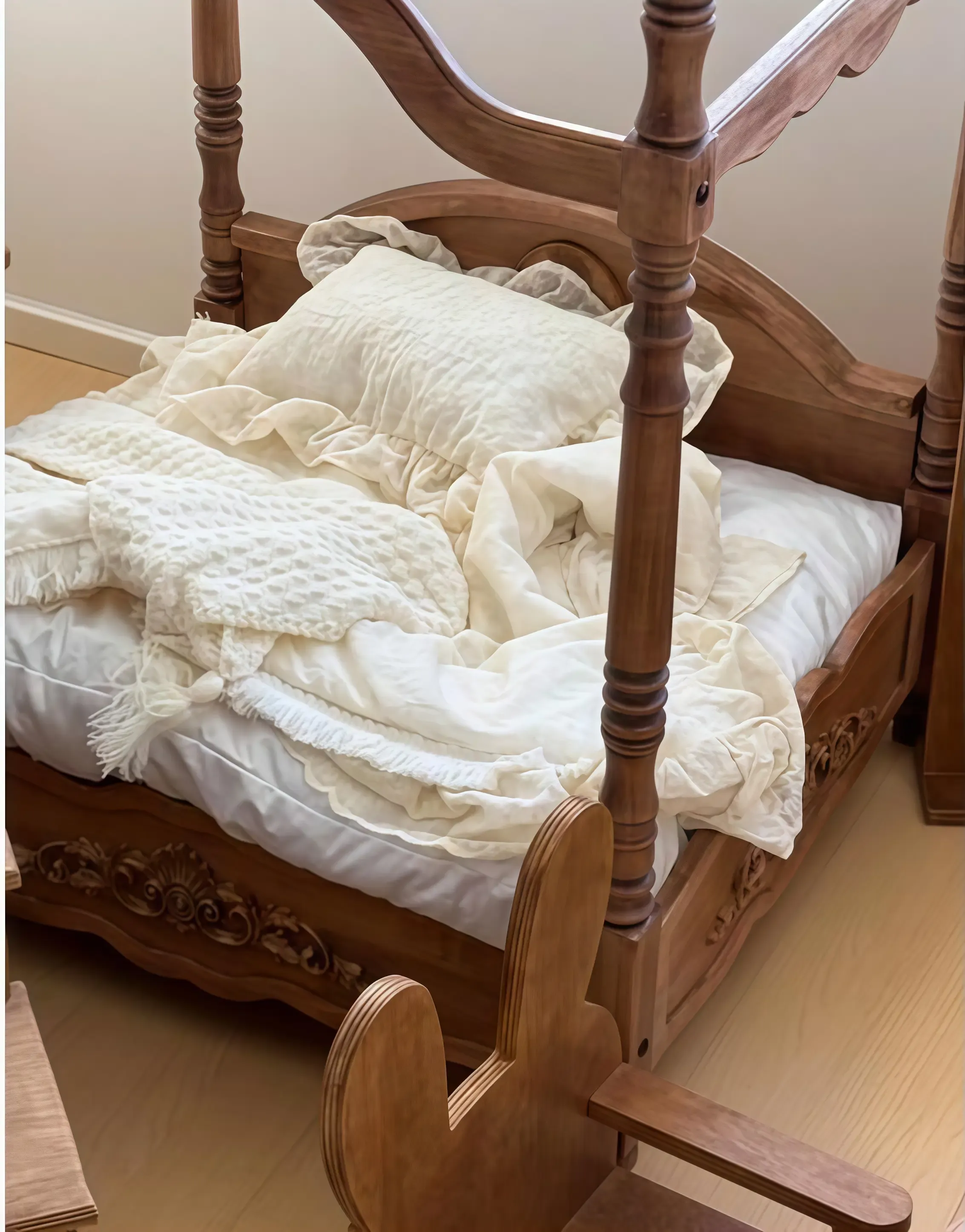
A Small Dog Bed Can Be More Structured Than a Cushion
There is nothing wrong with a simple cushion in the right room. But in a bedroom, a cushion often behaves like a temporary object. It shifts. It folds. It gathers hair along the edges. It can look like laundry even when it is clean.
A more structured small dog bed changes the visual language.
A frame gives the bed a boundary. It tells the room, “this belongs here.” That matters in bedrooms where every object is visible: the bedside table, chair, vanity, mirror, and soft textiles all speak to each other. A shapeless dog mat rarely joins that conversation.
Structure also helps some dogs. A defined edge can make a sleeping spot feel more secure. For dogs who like corners, blankets, chair legs, or the underside of furniture, a framed bed can formalize a behavior they already have.
This is where a canopy dog bed for small dogs makes sense. The canopy is not only decorative. It creates a protected little sleeping zone, closer to a tiny piece of furniture than a loose pad on the floor.
Match the Bed to the Bedroom’s Existing Materials
A bedroom dog bed should borrow from the room, not compete with it.
Look at what is already there:
- Wood tone
- Bedding color
- Curtain texture
- Metal finish
- Rug style
- Amount of visual detail
If the room has carved wood, warm fabrics, and softer vintage details, a plain grey plush bed may look oddly utilitarian. If the room is minimal and bright, an ornate bed may need enough surrounding softness to feel intentional. The goal is not perfect matching. Perfect matching can look stiff. The goal is visual agreement.
For most bedrooms, the easiest material connection is wood plus washable textile. Wood relates to furniture. Textile relates to bedding. Together, they make the dog bed feel like part of the room rather than a pet accessory that wandered in.
This is why solid wooden pet beds often work better than thick synthetic plush in styled rooms. Plush can be cozy, but too much fixed fabric becomes visually heavy and harder to clean. A wooden frame with removable bedding gives you the better split: structure from furniture, softness from washable layers.
For a deeper material breakdown, read what furniture materials actually hold up over time. Bedroom pet furniture has to survive fur, washing, moisture, and daily use without starting to look tired.

Choose a Bed That Can Be Cleaned Without Drama
Bedrooms are unforgiving places for pet odor.
In a living room, odor can disperse. In a bedroom, it sits close to fabric: sheets, pillows, curtains, rugs, clothing. A dog bed that cannot be cleaned easily will eventually become the thing you keep meaning to deal with.
Look for practical cleaning details:
- Removable bedding
- Washable covers
- Smooth frame surfaces
- Minimal deep seams
- Bedding that can be replaced seasonally
- Enough clearance around the bed to vacuum
Avoid fixed upholstery if the bed will be used every night. Avoid deep tufting unless it can be cleaned properly. Avoid fluffy edges that collect hair faster than they release it.
The best bedroom dog bed should make cleaning boring. Lift the cushion. Wash the cover. Wipe the frame. Vacuum around it. Done.
That sounds unromantic, but it is what keeps a beautiful object in the room for years.
Think About Height, Entry, and Nighttime Movement
Small dogs do not all move the same way.
A young, confident small dog may hop into a bed without thinking. A senior dog may hesitate before stepping over a high edge. A dog with short legs may dislike a bed that looks low to you but feels awkward to her. At night, when the room is darker and everyone is half-asleep, those details matter more.
For bedroom use, avoid making the entry too demanding. The bed should feel easy when the dog is tired, not only when she is alert.
Ask:
- Can my dog step into this bed without jumping?
- Is the entrance stable, or does the cushion slide?
- Will the bed move if she circles before lying down?
- Can she leave quickly if someone walks past?
- Will I trip over the bed in the dark?
A beautiful dog bed that creates bad nighttime movement is not good design. Bedroom furniture has to respect half-asleep humans and half-asleep animals.
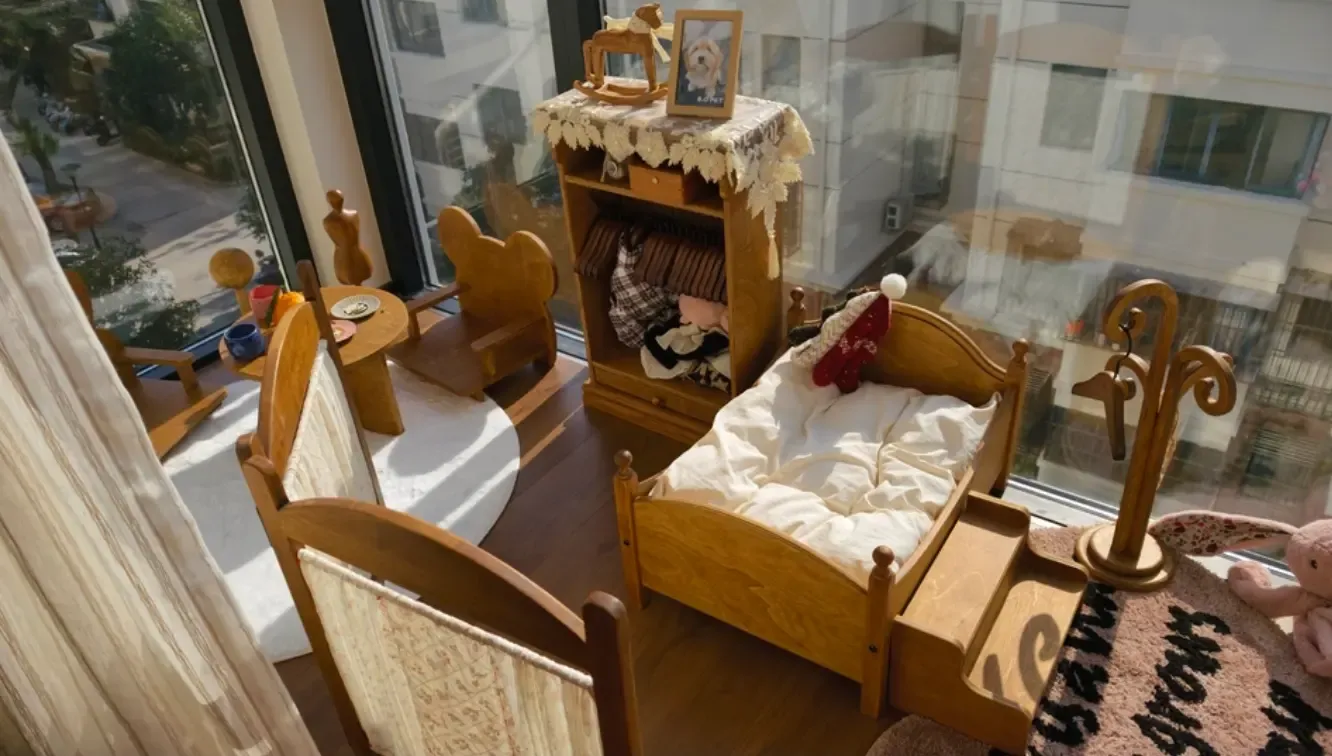
A Dog Bed for Bedroom Decor Should Still Belong to the Dog
There is a risk with decorative pet furniture: the human likes it more than the animal does.
That usually happens when style ignores behavior. A dog who likes cool floor surfaces may not want a thick, warm cushion. A dog who likes open sightlines may not enjoy a deeply enclosed cave. A dog who loves soft blankets may reject a bed with a stiff mattress. The room may approve. The dog may quietly decline.
Use your dog’s existing behavior as evidence.
If she sleeps under chairs, beside the bed, near curtains, or in corners, she may appreciate a bed with a defined frame or overhead feeling. If she chooses the middle of the rug, she may prefer open visibility. If she piles blankets into a nest, bedding texture matters more than exterior styling.
Good bedroom pet furniture does not ask the dog to become more decorative. It gives her existing preferences a better-looking form.
When a Canopy Dog Bed Is the Right Choice
A canopy dog bed is not for every dog or every room. It works best when the situation calls for both shelter and presence.
It is a strong fit when:
- The dog is small enough to use the bed comfortably.
- The bedroom already has soft, romantic, vintage, or decorative details.
- The dog likes protected corners or semi-covered resting spots.
- You want the bed to stay visible, not be hidden away.
- You need the pet area to feel intentional beside real furniture.
It is less ideal when:
- The dog is large or sprawls far beyond the bed’s footprint.
- The room is extremely minimal and cannot visually support detail.
- The dog overheats easily and avoids sheltered sleeping places.
- You need an orthopedic medical bed as the primary requirement.
That distinction matters. The goal is not to force every reader toward one product. The goal is to help the right reader recognize the right fit.
The Bedroom Test Before You Buy
Before buying a dog bed for bedroom use, do a simple test with painter’s tape or a folded blanket.
Mark the footprint where the bed would sit. Live with it for two nights. Walk around it in the dark. Open wardrobe doors. Make the bed. Vacuum. Notice whether the placement still makes sense when the room is being used, not just when it is tidy.
Then watch the dog.
Does she settle there naturally? Does she stay close to you without blocking movement? Does the spot feel calm, or does she keep moving away from door traffic and noise?
If the location works, then choose the bed. Not the other way around.
What I Would Choose for a Small Dog Bedroom Corner
For a small dog in a styled bedroom, I would start with a bed that has three things:
- A real frame
- Washable soft parts
- A shape that can stay visible without apology
That usually means avoiding the cheapest floor cushion and the overly bulky plush bed. Both can be useful in the right setting, but neither solves the bedroom problem particularly well.
If the room has a soft vintage, French, romantic, or decorative direction, the Canopy Princess Vintage Pet Bed is the product I would consider first. It gives a small dog a protected resting place while letting the bed behave like furniture inside the room.
If your priority is broader comparison, start with the Beds collection and compare structure, entry height, cleaning, and material before choosing by style.
A bedroom dog bed should not be an object you keep moving out of photographs.
It should be the small piece that makes the room feel more resolved because the dog finally has a place that belongs to her, and the room still belongs to itself.