
How to Choose Good Pet Furniture for Your Home
Good pet furniture should solve a real home problem: rest, movement, cleaning, safety, and visual fit. Here is how to choose pieces that last.
Good pet furniture does not start with the cutest product photo.
It starts with the part of your home that is not working.
Maybe your cat sleeps on the dining chair because every official bed is too exposed. Maybe your small dog keeps jumping off the sofa and landing badly. Maybe the pet corner technically exists, but it looks like something you apologize for when people come over. That is not a shopping problem. It is a design brief.
The right pet furniture should make the animal’s daily life easier and make the room feel more resolved. If it only does one of those things, it is not finished thinking.
Good Pet Furniture Solves One Clear Problem
Before you compare styles, name the job.
Most failed pet furniture comes from vague buying. A person wants “something nice for the cat” and ends up with a beige tower, a soft bed nobody uses, and a storage basket full of accessories that migrate around the room. None of it is terrible. None of it solves anything.
Start with the actual pressure point:
- A pet needs a protected sleeping place.
- A senior cat or small dog needs easier access to a bed or sofa height.
- A climbing cat needs vertical territory that is not your bookshelf.
- A multi-pet home needs separate resting zones.
- A design-conscious room needs pet furniture that can stay visible.
- A busy household needs pieces that clean quickly and do not hold odor.
One piece can do more than one job, but it should have a primary job. If you cannot explain why the furniture belongs in the room, the pet probably will not be able to explain it with her body either.
Watch Where Your Pet Already Chooses to Be
Pets are excellent site surveyors. They do not care about product categories. They care about heat, height, shelter, sightlines, texture, and distance from household traffic.
Before buying anything, watch your pet for three ordinary days. Not the cute moments. The repeat behavior.
Where does she nap when nobody moves her? Does she prefer the back of the sofa because it gives her height? Does she hide under the bed because the room feels too open? Does she choose the hallway rug because it catches afternoon sun? Does the dog keep settling beside your desk because proximity matters more than softness?
That evidence is more useful than a product review from a stranger’s house.
For example, a cat who already claims the top of a cabinet is not asking for a floor bed. She is asking for a better elevated route. A dog who circles three times and then lies half on, half off a cushion may need a larger resting surface, not a fluffier one. A senior pet who hesitates before jumping is telling you the access route has become too demanding.
Good furniture formalizes a behavior that already exists. Bad furniture asks the pet to become a different animal.

Choose the Category by Behavior, Not by Room Decor
Room style matters. It just cannot be the first filter.
A linen-colored pet bed may look perfect beside the sofa, but if your cat only rests in high, enclosed places, the bed will become a decorative tray for fur. A beautiful climbing structure may be wasted on a senior dog who needs low access and washable bedding. A canopy bed may be charming in a bedroom, but useless in a loud hallway where nobody wants to sleep.
Use this simple category match.
| Pet need | Better furniture direction | Watch out for |
|---|---|---|
| Protected rest | Framed bed, canopy bed, enclosed nook | Beds placed in exposed traffic paths |
| Height and observation | Cat wall system, perch, floor-to-ceiling tower | Single high shelf with no easy way down |
| Joint support | Low bed, stairs, ramp, stable entry | Tall beds with slippery surfaces |
| Scratching | Replaceable sisal panels or scratch zones | Decorative fabric in claw-contact areas |
| Multi-pet spacing | Multiple beds or perches in different zones | One “main” bed that becomes a conflict point |
| Cleaning and shedding | Smooth wood, washable cushions, removable covers | Deep tufting, loose weave, fixed upholstery |
This is where many purchases become clearer. You are not choosing between “cute” and “practical.” You are choosing the form that fits the animal’s actual routine.

Size Is About Use, Not Just Fit
The question is not only whether the pet furniture fits the room. It has to fit the animal in motion.
For beds, the pet should be able to curl, stretch, turn around, and settle without falling off the edge. Measure your pet while relaxed, not while standing stiffly. Add enough margin for turning and seasonal bedding. A bed that looks tidy because it is too small is not tidy. It is furniture-shaped hesitation.
For steps or ramps, look at stride and confidence. Small dogs, older cats, and short-legged breeds need stable transitions with enough surface area for each paw. A staircase that looks sweet in a photo but feels narrow underfoot will not get used consistently.
For cat shelves and perches, depth matters as much as width. A shallow platform may photograph lightly, but a cat needs enough surface to land, turn, and rest. Height also needs a route. A high perch without intermediate steps is not impressive. It is a dare.
The best pet furniture feels boringly easy to use. That is a compliment.
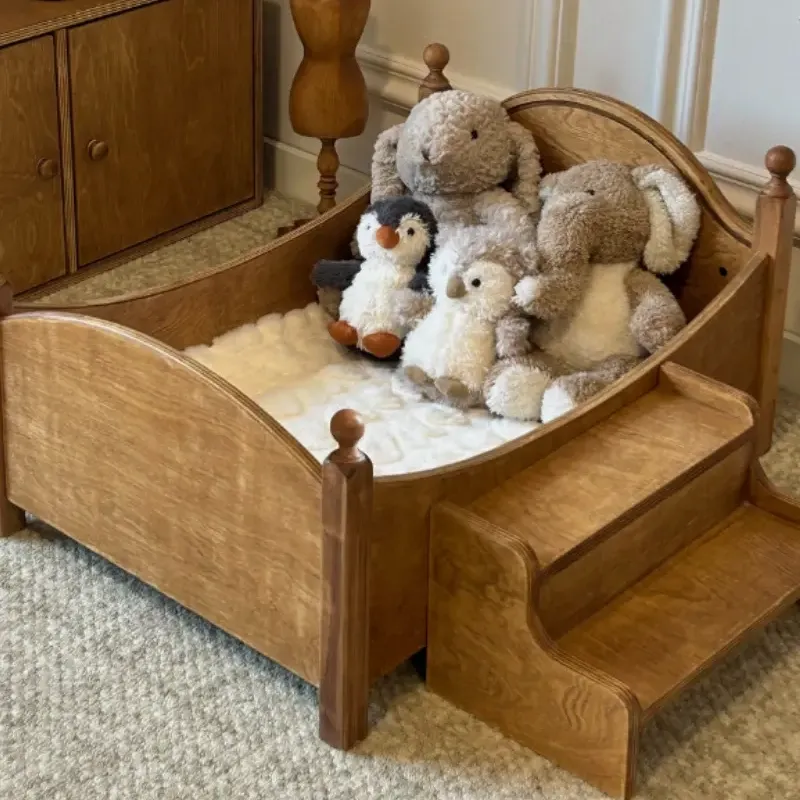
The Original Retro Wooden Pet Bed with Stairs is a useful example because the stairs are not an accessory afterthought. They change who can use the bed comfortably. That matters for senior cats, smaller dogs, heavier pets, and animals recovering from strain.
Materials Decide Whether It Still Looks Good Next Year
Pet furniture lives a harder life than ordinary accent furniture. It takes claws, fur, moisture, sun, cleaning products, weight, repeated jumping, and the occasional mysterious stain that nobody in the house admits responsibility for.
That is why material is not a cosmetic choice.
Solid wood and stable plywood usually hold up better than thin particleboard. Sealed surfaces clean better than raw porous surfaces. Washable cushions beat fixed upholstery. Replaceable scratch pads beat decorative fabric that has to survive forever.
The cheapest materials often fail in predictable ways:
- Carpet wrap holds odor and fur.
- Loose-weave fabric catches claws.
- Thin veneer chips at corners.
- Particleboard swells around moisture.
- Glossy finishes show every scratch.
- Deep tufting collects hair where cleaning tools cannot reach.
Good pet furniture should be honest about wear. If a cushion will get dirty, make it removable. If a scratching surface will be used hard, make it replaceable. If a wood frame will take daily contact, finish it so it can be wiped and repaired.
For a deeper material breakdown, read what furniture materials actually hold up over time. The short version is simple: choose materials that can be cleaned, maintained, and repaired without making the whole piece disposable.
Match the Furniture to the Room’s Traffic
A pet bed in the wrong place fails even when the bed itself is good.
Pets choose resting spots with a quiet calculation. They want enough privacy to relax, enough visibility to understand the room, and enough access to leave without being trapped. A bed beside a doorway may look convenient to you and feel exposed to the animal. A perch above a noisy speaker may give height but not calm. A dog bed in the center of a living room may feel socially warm during the day and too busy at night.
Think in zones:
- Quiet zone: bedrooms, reading corners, low-traffic walls. Best for deep rest.
- Observation zone: window areas, sofa backs, study corners. Best for cats and socially attached pets.
- Transition zone: hallways, doorways, kitchen edges. Usually bad for beds, sometimes useful for perches.
- Care zone: places near food, litter, cleaning, or storage. Best for accessories, not always for sleep.
The mistake is treating empty space as available space. A blank corner near the front door may be empty because everyone passes through it. Your pet knows the difference.
Do Not Buy Furniture That Creates a Cleaning Problem
If a piece cannot be cleaned in real life, it will eventually leave the room.
This is especially true in small homes, apartments, and bedrooms, where odor and fur have nowhere to disappear. Good pet furniture should make routine cleaning boring: lift the cushion, wash the cover, wipe the frame, vacuum the floor, done.
Look for:
- Removable cushions
- Washable covers
- Smooth sealed frames
- Replaceable bedding
- Minimal deep seams
- Enough clearance to clean underneath
- Surfaces that do not trap fur by design
Avoid pieces that rely on permanent plush, glued-on fabric, or decorative folds in high-contact areas. They may feel soft at first, but softness that cannot be cleaned becomes resentment.
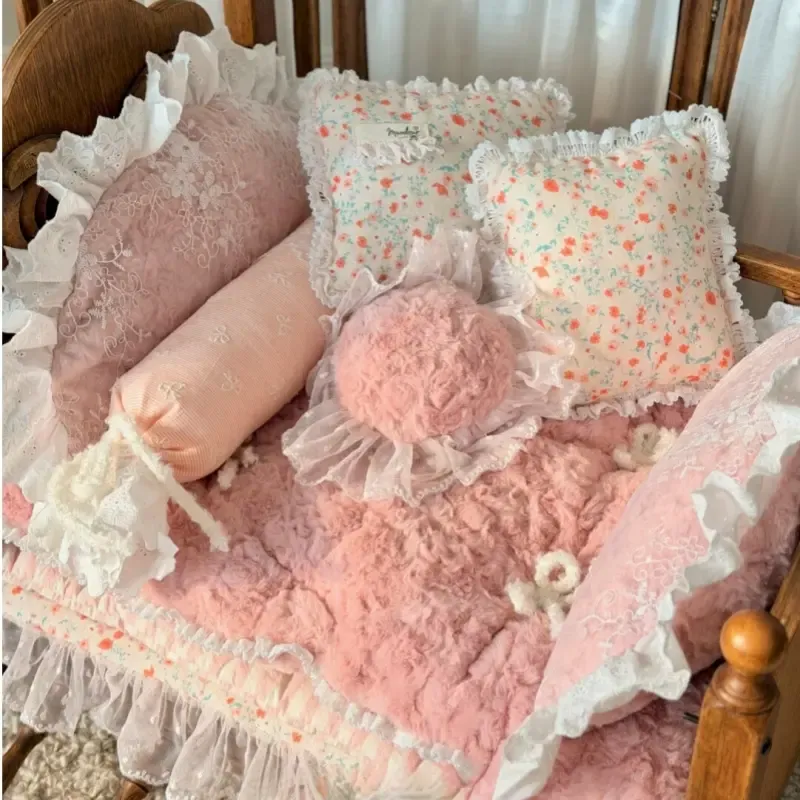
The pet beds with removable, washable bedding are where the maintenance logic becomes obvious. Soft parts should be the easiest parts to wash, rotate, and replace.
Choose Furniture Your Home Can Live With Visually
There is no virtue in buying pet furniture you immediately hide.
If the room is carefully designed, the pet furniture has to enter that design language. That does not mean everything must match perfectly. It means the piece should understand the room’s material, scale, and visual weight.
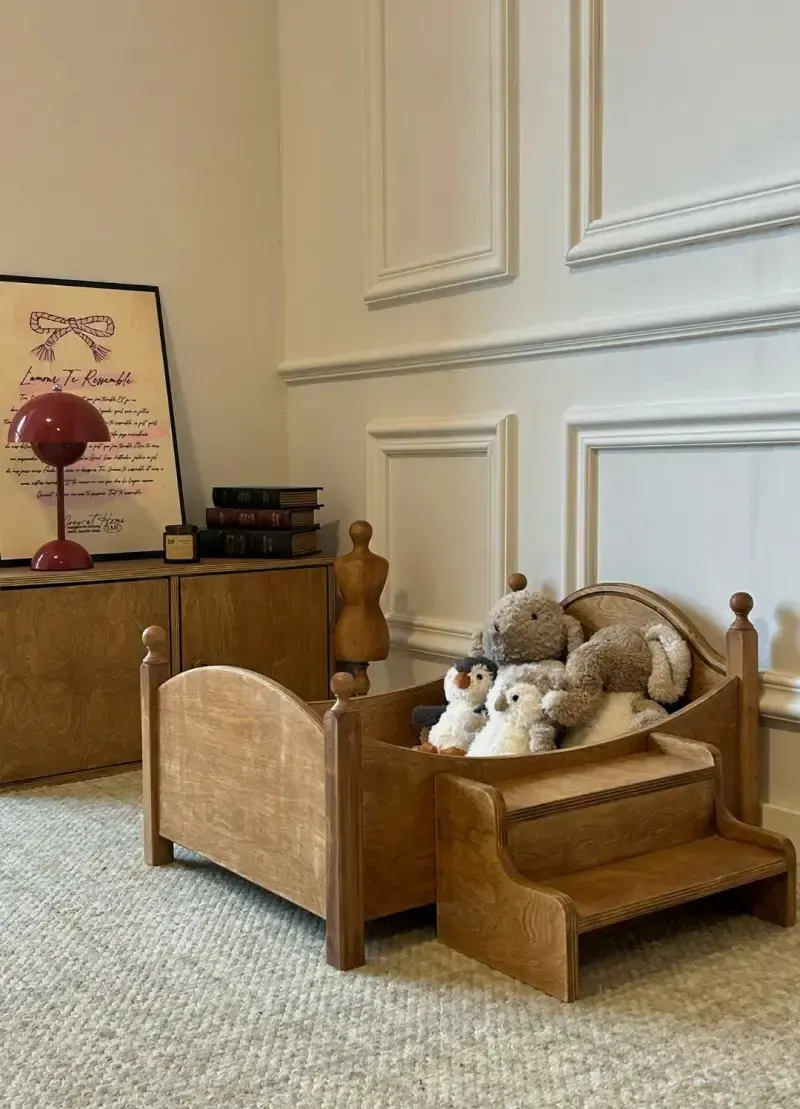
In a warm wood interior, a solid wooden pet bed can feel like a small companion piece to the human furniture. In a minimal white room, a clean wall-mounted system may disappear better than a bulky tower. In a bedroom with soft textiles, a framed or canopy bed can look intentional instead of improvised.
The problem with most pet-store furniture is that it tries to look neutral and ends up looking apologetic. Beige carpet, grey plush, fake wood, exposed hardware, oversized platforms. It does not disappear. It just looks undecided.
Choose fewer pieces with better material presence. A single solid bed in the right place often does more for a room than three flimsy products scattered around it.
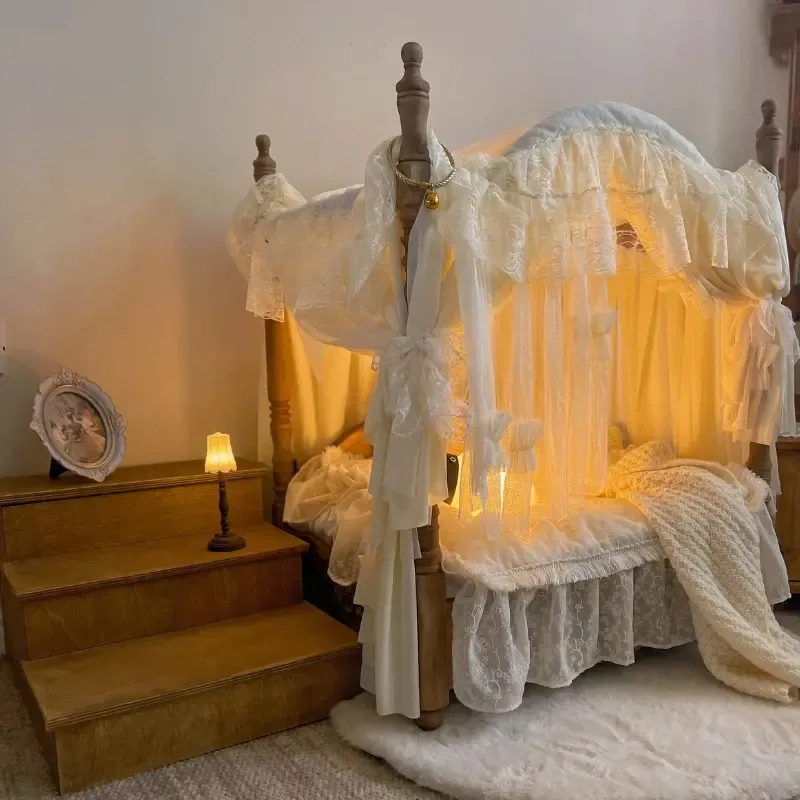
For a bedroom, dressing corner, or soft living-room nook, a canopy dog bed for small dogs and cats can make more sense than a loose floor cushion. The Canopy Princess Vintage Pet Bed is not trying to vanish. It behaves like a small decorative bed with a practical rest function, so the sleeping area feels intentional instead of temporary.
Think About the Second Pet, the Second Room, and the Second Year
The first week is not the test.
The test is whether the furniture still makes sense after the room changes, the pet ages, the cushion needs washing, or a second animal joins the household. Cheap pet furniture often answers only the first-day question: does it look nice enough to buy? Better furniture answers the second-year question: can this keep working?
Ask before buying:
- Can soft parts be washed or replaced?
- Can the structure be tightened, repaired, or refinished?
- Will the piece still suit the room if I move the sofa?
- Does the pet have a way in and out that will still work as she ages?
- If my home adds another pet, does this create conflict or relieve it?
This is why modular thinking matters even for simple products. A bed can accept new bedding. A wall system can expand. A scratch surface can be renewed. Good pet furniture should not make replacement the only future plan.
What I Would Buy First
If you are starting from nothing, do not buy a full set.
Buy the one piece that solves the most daily friction.
If your pet has no reliable resting place, start with a real bed: stable frame, washable bedding, protected location. The Beds collection is the right place to begin because rest is the foundation of most pet-friendly homes.
If your cat keeps stealing height from counters and shelves, read how to choose a cat wall system before buying another floor tower. She may not need more furniture on the floor. She may need a route through the room.
If your problem is mostly cleaning, do not buy a prettier version of the same fixed plush bed. Start with washable textiles, replaceable cushions, and smoother materials.
Good pet furniture is not the piece that gets the most compliments on day one. It is the piece nobody wants to remove after a year because it has become part of how the home works.
Start with the room. Watch the animal. Choose the piece that makes both easier to live with.
For most homes, that first serious piece is a well-built bed with washable soft parts. Browse the Beds collection and choose by behavior first, style second.